
Introduction
Order a dry-aged steak for the first time and you’ll notice something before the first bite: the aroma. It’s deeper and a little nutty, like brown butter meeting good beef.
That difference isn’t seasoning. It’s weeks of patience, precise temperature control, and real butchery skill.
In this guide you’ll learn what dry-aging does to beef, how it compares with wet-aged and fresh steak, which cuts age best, how live fire changes the experience, and how to order like a regular. Whether you’re a curious first-timer or chasing the best steak in Manhattan NYC.
What Is Dry-Aged Steak?
Dry-aged steak is beef stored uncovered in a refrigerated room for an extended period, usually 21 to 45 days, before it’s cut and cooked.
Butchers don’t age individual steaks. They age large sections called sub-primals, such as whole bone-in ribs or short loins. Afterward, the dried outer crust is trimmed off, and steaks are cut from the tender, concentrated meat inside.
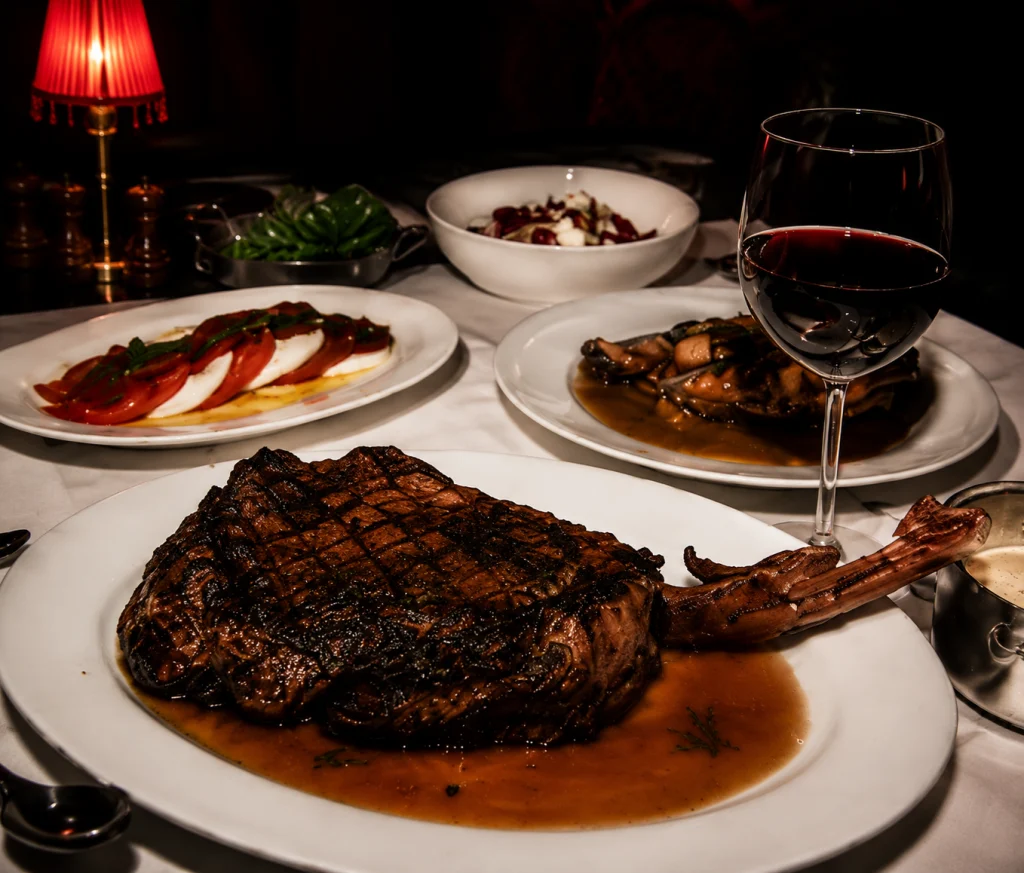
The Three Controls That Matter
- Temperature — Just above freezing, typically 34–38°F (1–3°C)
- Humidity — Around 75–85% so the beef dries slowly and evenly
- Airflow — Constant circulation keeps the surface dry and safe
The Science Behind the Flavor
Three natural processes work together during dry-aging.
1. Evaporation Concentrates Flavor
As moisture leaves the beef, it can lose 15–30% of its weight. Less water means more concentrated beefiness in every bite, much like reducing a sauce.
2. Natural Enzymes Tenderize
Beef contains its own enzymes. Over weeks, they gently break down tough fibers and connective tissue, creating a softer, more buttery texture.
3. The Crust Adds Complexity
A dry outer bark forms during aging. It’s trimmed away before cooking, but it contributes subtle savory, earthy notes connoisseurs love.
How Flavor Changes With Aging Time
| Aging Time | Tenderness | Flavor Profile | Best For |
| 14–21 days | Noticeably tender | Clean, mildly beefy | First-timers |
| 28–35 days | Very tender | Nutty, rich, buttery | Most steak lovers (the sweet spot) |
| 45–60 days | Extremely tender | Deep, funky, cheese-like | Adventurous diners |
| 60+ days | Melt-in-mouth | Intense, blue-cheese notes | True connoisseurs |
Why Live Fire Makes Dry-Aged Steak Even Better
Dry-aged beef has a drier surface, and that’s a gift over a real fire.
Faster, Deeper Crust
Less surface moisture means the steak browns almost instantly, building a crisp, caramelized crust.
Gentle Smoke That Complements, Not Masks
Oakwood burns hot and clean. It adds a light smokiness that frames the nutty aged flavor instead of overpowering it.
Theater at the Table
At Andrew Steak Society, steaks are cooked over a red-hot oakwood flame in the dining-room fireplace, so guests watch their dinner come to life.
Why Is Dry-Aged Steak More Expensive?
- Weight loss: Evaporation shrinks the beef significantly
- Trim loss: The dry exterior is cut away and discarded
- Time: Aging rooms hold valuable inventory for weeks
- Equipment: Climate-controlled chambers are costly to run
- Starting quality: Only high-grade, well-marbled beef ages well
- Expertise: Skilled butchers monitor, trim, and portion every cut
The Best Cuts for Dry-Aging
Classic Favorites
- Ribeye — Generous marbling makes it the richest, most popular dry-aged cut
- New York Strip — Firm, beefy, and balanced; a steakhouse dry aged classic
- Porterhouse — Strip and tenderloin in one, perfect for sharing
- Tomahawk — A bone-in showpiece for celebrations
Cuts for the Curious
- Rib cap (spinalis) — The ribeye’s outer crown, often called the most flavorful bite on the animal
- Vaca Vieja — Beef from older dairy cows, prized in Spain for deep, mineral flavor and rich yellow fat
Cuts Rarely Dry-Aged
- Filet mignon — Too lean to gain much flavor
- Flank and skirt — Too thin, with too much exposed surface
How to Order Dry-Aged Steak Like a Pro
- Ask how long it’s aged. A good server knows the exact days.
- Ask how it’s cooked. Broiler, charcoal, or live wood each create a different crust.
- Choose medium-rare. Dry-aged beef has less moisture and overcooks quickly.
- Taste it plain first. Add sauce only after you’ve met the beef.
- Pair boldly. Cabernet Sauvignon, Malbec, or Syrah stand up to the richness.
- Share a big cut. Porterhouses and tomahawks are built for the table.
Benefits of Choosing Dry-Aged Steak
- Deeper flavor — Concentrated, savory, and complex
- Superior tenderness — Natural enzymes do the work
- Better crust — A drier surface sears beautifully over fire
- Premium starting beef — Only top-grade meat is worth aging
- A memorable occasion — Ideal for anniversaries, date nights, and celebrations
- Craftsmanship you can taste — Weeks of skill on one plate
Finding the Best Steak in Manhattan NYC
Manhattan’s steak scene ranges from century-old Midtown institutions to glossy Meatpacking hotspots. The real question is what kind of experience you want around your steak.
Andrew Steak Society brings something different to the East Village: dry-aged prime beef, a live oakwood fire you can watch from your seat, and a menu shaped by Chef Michael Vignola, whose résumé includes some of New York’s best-known steak programs.
Beyond the classics, you’ll find rarer cuts like rib cap and Vaca Vieja, rotating specials, fresh seafood, and handcrafted cocktails, all in an intimate, modern room.
Frequently Asked Questions
1. What makes dry-aged steak different from regular steak?
It’s aged uncovered for weeks in a controlled room, losing moisture and gaining tenderness. The result is a richer, nuttier flavor than fresh steak.
2. Is dry-aged steak safe to eat?
Yes. With strict temperature, humidity, and airflow control, and the outer crust trimmed away, dry-aged beef is completely safe.
3. How long is steak usually dry-aged?
Most steakhouses age beef 21–45 days. Around 28–35 days is the most popular balance of tenderness and flavor.
4. What does dry-aged steak taste like?
Expect concentrated beefiness with nutty, buttery notes. Longer aging brings deeper, almost cheese-like complexity.
5. Why does dry-aged steak cost more?
The beef loses weight through evaporation and trimming, ages for weeks, and requires premium beef and specialized equipment.
Conclusion
Dry-aged steak is special because it’s the product of patience. Weeks of careful aging concentrate flavor and soften texture, and a live fire turns that craft into something unforgettable.
Now you know what to ask: aging time, cut, doneness, and cooking method. Order with confidence next time you sit down at a steakhouse.
Ready to taste the difference? Reserve your table at Andrew Steak Society.